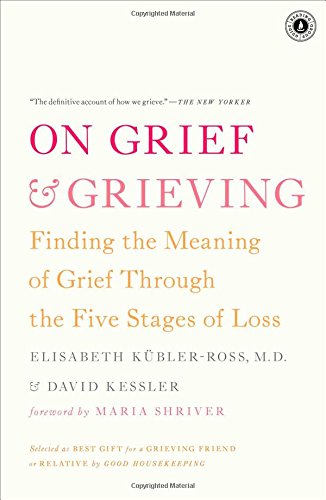
Frequently Asked Questions on Grief & Grievingby David Kessler What is Anticipatory Grief?Anticipatory grief is the “beginning of the end” in our minds. We now operate in two worlds; the safe world that we are used to and the unsafe world where a loved one might die. We feel that sadness and the unconscious need to prepare our psyche.
Anticipatory grief is generally more silent than grief after a loss. We are often not as verbal. It’s a grief we keep to ourselves. We want little active intervention. There is little or no needs for words, it is much more of a feeling that can be comforted by the touch of a hand or a silently sitting together. Most of the time in grief we are focused on the loss in the past, but in anticipatory grief we occupy ourselves with the loss ahead. When a loved one has to undergo preparatory grief in order to prepare for the final separation from this world, we have to go through it too. We may not realize it at the time. It may be a strange feeling in the pit of the stomach or an ache in the heart before the loved one dies. We think of the five stages of death occurring for the dying person, but many times loved ones go through them ahead of the death also. This is especially true in long drawn out illnesses. Even if you go through any or all of the five stages ahead of the death, you will still go through them again after the loss. Anticipatory grief has its own process; it takes its own time. Forewarned is not always forearmed. Experiencing anticipatory grief may or may not make the grieving process easier or shorten it. It may bring only feelings of guilt that we were grieving before the loss actually occurred. We may experience all fives stages of loss (denial, anger, bargaining, depression and acceptance) before the actual death. We may experience only anger and denial. Not everyone experiences anticipatory grief and if they do, certainly not in the same way.
What is Grief?
Why not just avoid grief?
What is the difference between grief and mourning?
When does grief end?Grief is not just a series of events, or stages or timelines. Our Society places enormous pressure on us to get over loss, to get through the grief. But how long do you grieve for a husband of fifty years? A teenager killed in a car accident? A four-year-old child? A year? Five years? Forever? The loss happens in time, in fact in a moment, but its aftermath lasts a lifetime.
What are the five stages and do they always occur in the same order?
What is denial? These feelings are important; they are the psyche’s protective mechanisms. Letting in all the feelings associated with loss at once would be overwhelming emotionally. We can’t believe what has happened because we actually can’t believe what has happened. To fully believe at this stage would be too much.
Does “denial” mean they don’t know the person has died?
Do children experience grief?
How long will grief last? Do I ever get over the loss of a loved-one?
I Have a friend in grief; how can I help?
Are bereavement support groups helpful? How can I find one near me?
A well-known person has died and I feel sad. Why do I feel this way?
Should a child go to a funeral? If so, how do I prepare them?
|
||||||||||||||||||||||||||||