
Grief after a Murder
The grief of murder may be even more difficult to deal with than loss from a disease because the answer to “why” is always a third party. It is important for people to understand that gradually, in your own time, you can begin to find some solace with what has happened. In these situations, such as murder, it is vital to understand we have a legal system, not necessarily a justice system. For some, the only justice would be to have their loved one back. Acceptance is a process that we experience, not a final stage with an end point.
Here are some tips to help with the grieving process after a murder:
- Those who have lost a loved one due to natural causes may not understand all the complexities of a loss from a murder.
- Murder has its own deeper level of denial and shock. The event is unbelievable, unexpected, tragic and a crime, all at once.
- You may feel anger longer and deeper than from other deaths. Find constructive ways to let your anger out. And give yourself lots of permission to be angry. A horrible injustice has been done to your loved one, family, friends and the world.
- Look for forgiveness on your time zone, not others. Forgiveness comes from within, not from a “should forgive” place. When friends tell you the stories of how a victim’s family found peace, just know they are in pain because they see you in pain.
- Grief after murder has many expressions; our grief is as unique as a finger print. Some may want to get involved in the legal case, some may not. Others may want to face the murderer, others may not.
- Know that not finding the murderer will often cause complex and unresolved grief. Of course it will be harder to find peace in a world where your loved one was killed and the murderer still walks free.
- Murder is especially horrifying because another person’s actions took an innocent life. The idea that the tragic loss of a loved one can be determined by another person’s decision is devastating. It can also be incomprehensible that it can be a random act. The perpetrator may not be known to the victim or vice versa. The shock of losing someone to murder takes hold immediately and leaves family members totally bewildered.
These are some thoughts I have seen in my work. My teachers have always been those who have dealt with loss directly. I invite anyone who has tips to share after a murder to please write to me at David@grief.com

Grief Resources
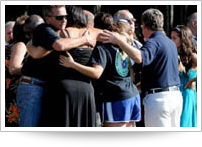
Bereavement groups often offer individuals an important opportunity to be with others as they allow their grief to heal. Read More.
Children in Grief

Children read our feelings and mirror our emotions. Soaking up reassurance or fear, love or hate, safety or danger. Read More.
Grief & Holidays

When you have lost someone special, your world losses its celebratory qualities. Holidays only magnify the loss. Read More.
Dealing with Pain

Each person has his or her own beliefs about pain and pain behaviors. What are your beliefs about pain? Read More.