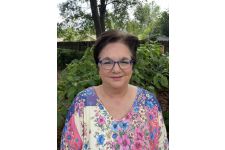
As a Grief Educator, I offer individual and group sessions in a virtual setting, and host retreats two times per year. I am also a speaker and workshop facilitator on grief and post-traumatic growth based on my work and book, Grief Relief – The Practice.
Grief is a profound, multidimensional experience that resides not just in the heart and mind, but deeply within the physical body. It manifests as muscle tension, chest tightness, fatigue, and systemic changes at a cellular level. For those suffering from prolonged grief, wondering if they will ever feel “normal” again, this book offers a path toward healing. It is not a guide to “becoming happy” or a source of toxic positivity, but rather a structured practice to help you return to center and carry your grief with more ease.
The Practice approaches healing through five pillars—Grace , Rest, Integration, Expression, and Forward Focus—offering tools within Mindfulness, Movement, and Music to address the somatic, emotional, intellectual, and neurobiological aspects of the human condition. By exploring these intricacies, we learn to “untangle” physical and emotional tension, allowing grief to alchemize into wisdom rather than remaining trapped as pain.
The Role of the Grief Educator
Grief is not a problem to be solved, a disease to be cured, or a phase to be rushed through. It is a natural, universal response to loss. As a Grief Educator, my role is not to “fix” your grief, but to walk alongside you as a compassionate witness to it.
Drawing on the foundational work of David Kessler, I provide a structured, supportive space to help you navigate the complex terrain of loss. My focus is on education, understanding, and the gentle pursuit of meaning.
Grief is a profound, messy, and deeply personal journey. As a Certified Grief Educator, my role is not to cure your pain, but to witness it. Borrowing the philosophy of David Kessler, I believe that your grief is as unique as your fingerprint, and it deserves to be honored, not rushed.
I provide a safe, non-judgmental space where your loss can be spoken of, your pain can be seen, and your love can be remembered. Together, we don’t try to find a way out of grief; we find a way to live with it, eventually moving toward the sixth stage of grief: finding meaning.
My Approach is Grounded In:
-
Witnessing Pain: Creating a sacred space where you don’t have to put on a brave face.
-
Honoring the Connection: Recognizing that the pain you feel is a direct reflection of the love you shared.
-
The Sixth Stage: Guiding you gently toward finding meaning in the aftermath of loss—not finding meaning in the death, but in the life lived and the life you continue to live.
We move away from outdated models that suggest you simply need to “let go” or “move on.” Instead, we embrace a framework built on four essential truths:
-
Grief is individual: There is no right or wrong way to grieve. Your grief is as unique as your fingerprint.
-
Grief is not linear: It does not follow a neat sequence of stages. It is a fluid experience that can shift from moment to moment.
-
The goal is not closure: We do not seek to close the book on your loved one or your loss. Instead, we look for ways to carry the love forward and integrate your grief in a new and profound way.
-
Meaning is the sixth stage: Beyond denial, anger, bargaining, depression, and acceptance, there is a path to finding meaning—a way to integrate the loss into your life story while honoring what you have lost.